
Container loading optimization for wall panels can lower landed unit costs, but a poor calculation creates expensive problems. An order may fit by volume yet exceed its permitted payload, damage panels, or become difficult to unload. I prevent these issues by calculating each shipment from packed dimensions, weight, SKU mix, and handling requirements.
Container loading optimization for wall panels means maximizing the safely delivered, saleable quantity rather than filling every theoretical cubic meter. I calculate capacity from packed loading modules, verify weight and route restrictions, adjust mixed-SKU quantities, and retain enough protective packaging to control damage. Every order requires its own loading plan.
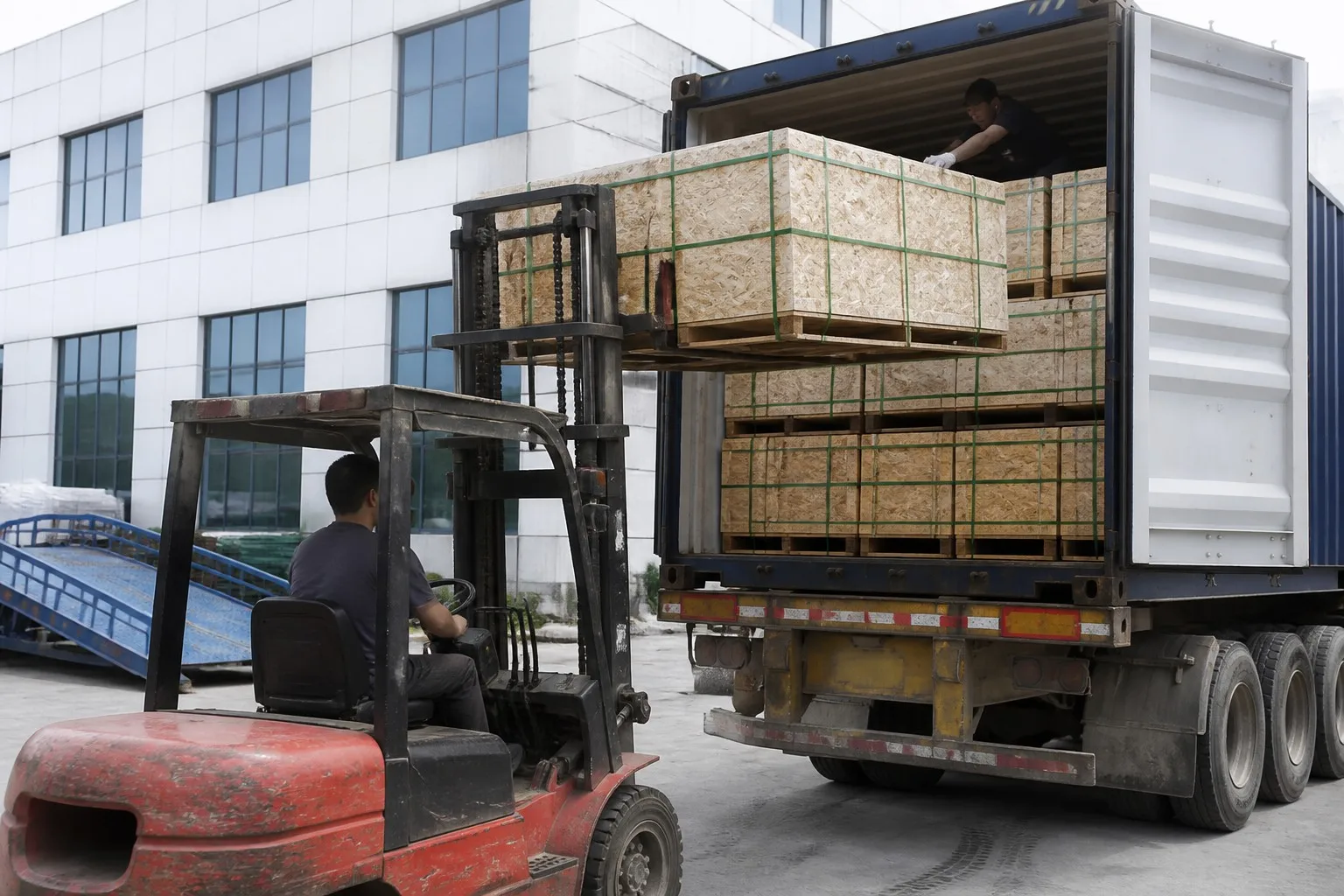
A reliable plan connects geometry with commercial priorities. I therefore ask for product specifications, packaging preferences, unloading conditions, and flexible SKU quantities before confirming capacity. The following process shows how I turn those details into a practical FCL proposal.
How Do I Calculate Container Loading Optimization for Wall Panels?
A nominal container volume looks simple, but wall-panel loading rarely behaves like a liquid filling a box. Packaging adds dimensions, loading orientations create gaps, and doors restrict movement. If I calculate from bare panels or catalogue specifications, the resulting quantity may be impossible to load safely.
I calculate wall panel container capacity from the external dimensions and gross weight of each packed bundle, carton, pallet, or frame. I then arrange those units inside the container’s verified internal dimensions while allowing for doors, bracing, handling space, weight distribution, and practical loading orientation.
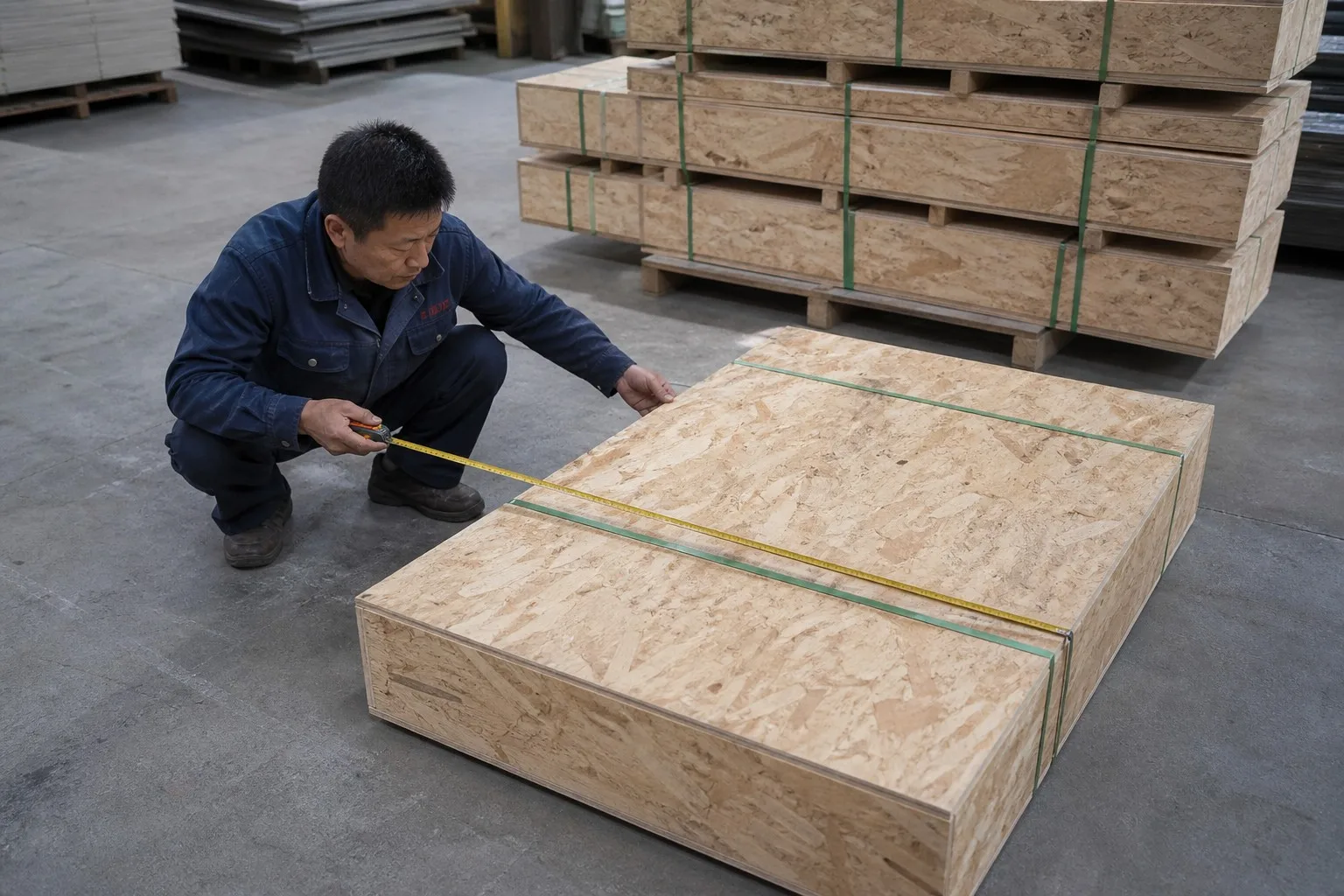
I start with shipment-specific inputs
I request or confirm the following data before I recommend a quantity:
- Panel length, width, and thickness
- Pieces per carton or bundle
- External packed dimensions
- Gross weight per loading unit
- Packaging type and protection level
- Number of colors, patterns, and SKUs
- Container type under consideration
- Destination, route, and unloading method
- Quantities that the buyer can adjust
- Quantities that must remain fixed
I treat the packed loading unit as the basic calculation module. For example, corner protectors, foam, cartons, wooden frames, and pallets all consume space. They may also limit stacking direction. Bare-panel dimensions cannot represent these effects.
The basic geometric check is:
Loading units per row × rows per layer × usable layers = initial physical capacity
I repeat this calculation for plausible orientations. I also check whether each unit can pass through the container door. A layout that fits the internal body may still fail at the opening.
I distinguish theoretical and practical capacity
| Calculation stage | What I consider | Why it matters |
|---|---|---|
| Nominal volume | Published container volume | I use this only for early comparison |
| Geometric fit | Packed length, width, and height | I identify possible loading patterns |
| Weight check | Gross cargo and packaging weight | I screen for payload conflicts |
| Operational fit | Door access, loading, bracing, unloading | I test whether the layout is workable |
| Commercial result | Saleable quantity and landed unit cost | I judge whether the plan creates value |
I do not publish a universal “panels per container” figure. UV marble boards, SPC wall panels, flexible veneer, and outdoor cladding have different densities, dimensions, and packaging systems. Even the same product can produce a different result after a buyer changes thickness, carton quantity, palletization, or protective framing.
How Does Container Loading Optimization for Wall Panels Balance Space and Weight?
A visually full container is not necessarily an acceptable container. Dense products can reach the permitted payload before available space is used.[^1] A space-efficient arrangement can also concentrate weight poorly[^2] or conflict with road, port, carrier, and destination rules.
I optimize space and weight at the same time by comparing the proposed cargo gross weight with the container and route-specific permitted payload. I also review weight distribution, packaging weight, loading feasibility, and unloading safety. I ask the freight forwarder or carrier to verify applicable limits before shipment confirmation.
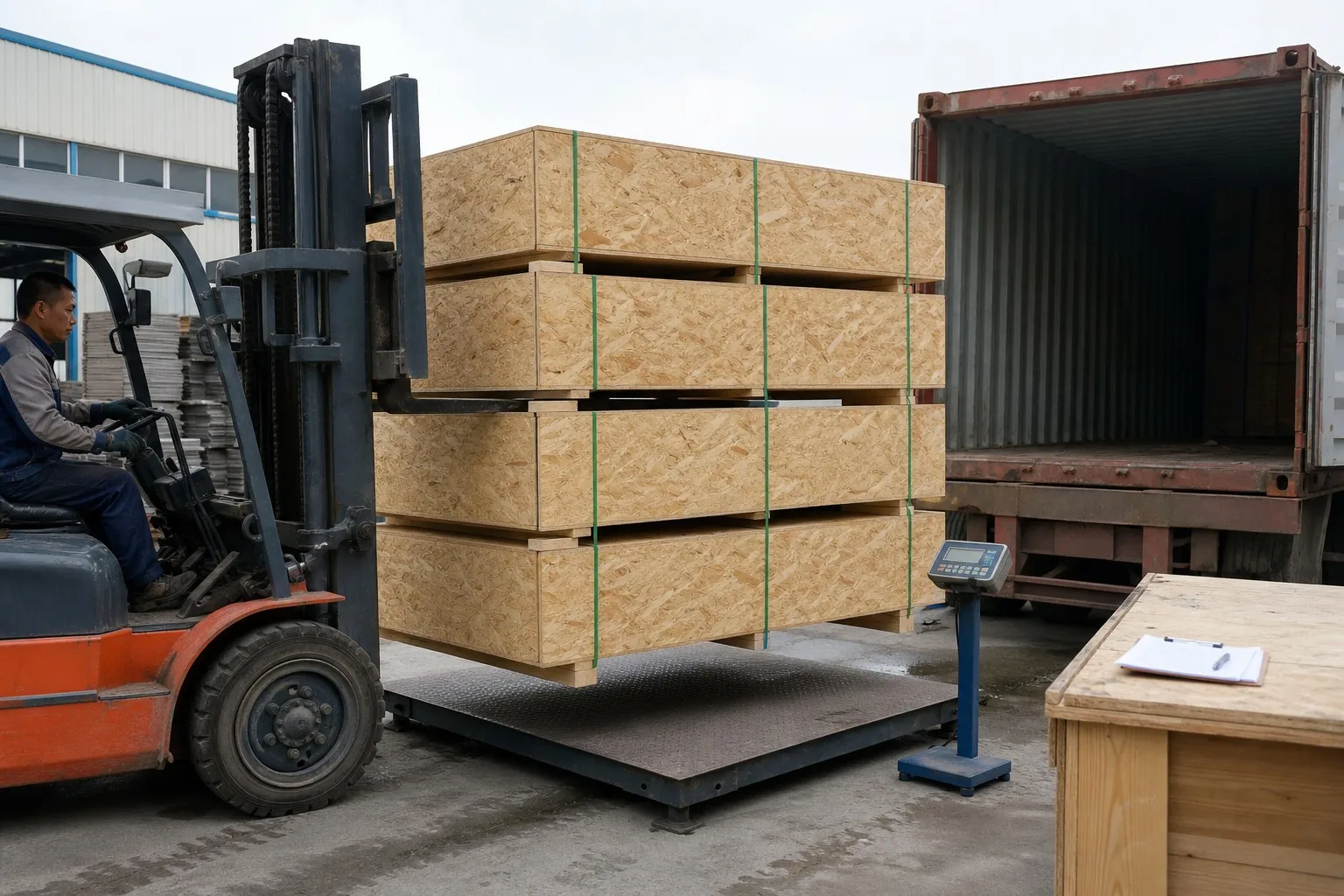
I verify limits rather than assume them
Container specifications vary by equipment owner and unit. Route restrictions can also change the practical cargo allowance.[^3] I therefore separate three figures:
- Physical fit: What can be arranged inside the selected equipment?
- Calculated gross cargo weight: What do the panels and all packaging weigh?
- Permitted shipment weight: What does the carrier, route, port, and local transport system allow?
I am a manufacturer and exporter, not a carrier or transport-engineering authority. I can prepare the cargo calculation and loading proposal, but the buyer or appointed forwarder should verify payload rules and route-specific restrictions in writing.
I compare packaging as a risk-cost decision
Loose bundles may use space efficiently for certain products, but they are not automatically the best choice. Pallets or frames can improve forklift handling, separation, and unloading control.[^4] They also add weight and occupy space.
| Packaging method | Potential advantage | Point I verify |
|---|---|---|
| Cartons or bundles | Compact loading modules | Compression and manual handling |
| Pallets | Faster mechanical handling | Lost height and pallet weight |
| [Wooden frames | Strong edge and face protection | Added dimensions and destination rules](https://www.ippc.int/static/media/files/publication/en/2019/02/ISPM_15_2018_En_WoodPackaging_Post-CPM13_Rev_Annex1and2_Fixed_2019-02-01.pdf)[^5] |
| Mixed packaging | Protection matched to each SKU | Loading sequence and stability |
I judge the result by saleable panels delivered, not the highest theoretical piece count. Removing necessary protection to add another bundle can reduce value if surfaces, corners, click systems, or decorative finishes arrive damaged.[^6]
I also ask how the container will be unloaded. A warehouse with a dock and suitable equipment can accept a different arrangement from a construction site using manual labor.[^7] I prefer a slightly lower count when the denser layout would make safe unloading unrealistic.
How Can Mixed-SKU Orders Improve Wall Panel FCL Utilization?
Mixed orders can reduce unused gaps, but they also introduce inventory risk.[^8] If I increase a slow-moving finish only because it fits neatly, the buyer may save freight space while creating excess stock. Container optimization must support the buyer’s sales plan as well as the loading geometry.
I optimize a mixed-SKU FCL by separating fixed quantities from flexible quantities and ranking SKUs by commercial priority. I first protect essential stock levels. I then use flexible cartons or bundles to fill remaining loading modules, provided that weight, packaging, separation, access, and unloading requirements remain acceptable.
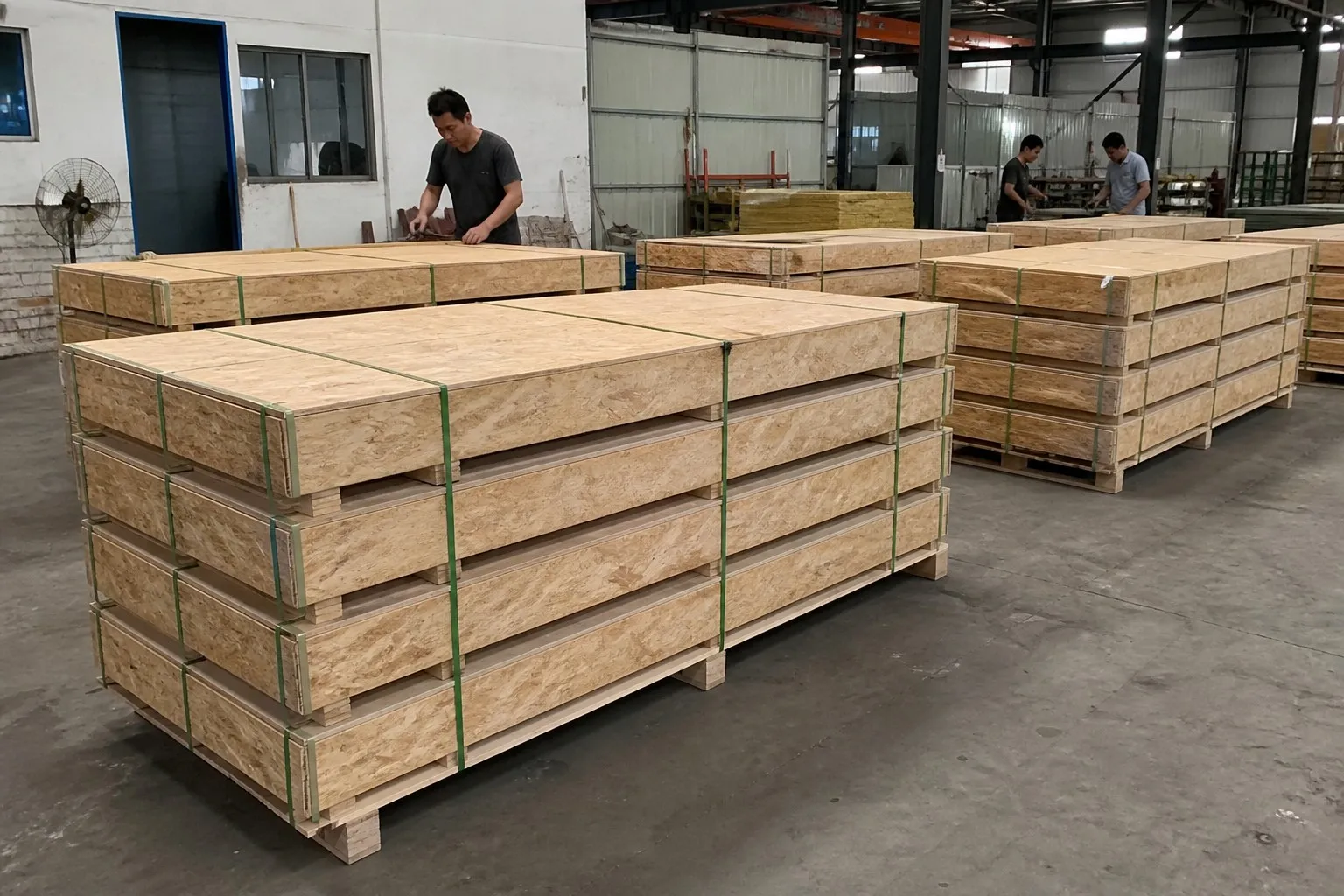
I use a priority-based order table
I normally organize the order in this format:
| SKU group | Quantity status | Loading treatment |
|---|---|---|
| Project-critical items | Fixed | I load these first in the calculation |
| Core fast-moving designs | Preferred | I adjust within an approved range |
| Trial colors or finishes | Limited | I protect the maximum stock limit |
| Flexible replenishment SKUs | Adjustable | I use these to reduce remaining gaps |
This approach prevents geometry from controlling the purchasing decision. I ask the buyer which quantities can move by a carton, bundle, pallet, or other complete packing unit. I never assume that every SKU is equally flexible.
I document the revision process
In one anonymized mixed-SKU loading review, I received an order with both fixed project items and adjustable distributor stock. I checked the confirmed packing list, external package measurements, gross weights, and proposed container type. The first combination left gaps that could not accept another full module without changing the SKU allocation.
I did not claim that the unused space represented automatic savings. Instead, I prepared a revised layout that kept the fixed project quantities and adjusted only buyer-approved replenishment items. I then checked the loading sequence, package separation, total calculated weight, and unloading access.
The buyer reviewed the revised allocation before production planning. The forwarder remained responsible for confirming route and carrier restrictions. I use this case to show the decision process, not to promise a repeatable capacity gain. I have omitted numerical results because product, packaging, equipment, and route figures must be confirmed for each shipment before publication or reliance.
For every mixed load, I provide a clear basis for the proposed quantity. Useful documents can include:
- SKU-level packing list
- Package dimensions and gross weights
- Loading layout or sequence
- Packaging specification
- Container type requested
- Photos during loading
- Seal number and final shipping documents
These records help buyers compare the planned shipment with the loaded shipment and investigate any quantity or damage issue.
Frequently Asked Questions
Should I choose a 20-foot or 40-foot container for wall panels?
I compare packed volume, cargo weight, SKU quantity, unloading conditions, and route limits. Dense panels may become weight-limited before a larger container becomes space-efficient. I recommend requesting calculations for realistic container options and asking the carrier or forwarder to verify permitted payloads.
Does palletizing always reduce wall panel capacity?
Pallets usually add dimensions and weight, but I do not assume that they create a worse commercial result. They may improve forklift handling, package stability, warehouse efficiency, and damage control. I compare palletized and non-palletized layouts by safely delivered quantity and landed unit cost.
What information should I send for an FCL loading calculation?
I need panel specifications, quantities by SKU, packing method, packed dimensions, gross weight, preferred container type, destination, and unloading method. I also ask which SKU quantities are fixed and which are flexible. Complete inputs let me produce a more realistic loading proposal.
Can different wall panel products share one container?
I can plan mixed-product loads when packaging, weight distribution, compatibility, separation, and loading sequence permit them. I check whether heavy units could damage lighter products[^9] and whether each product can be accessed safely. The final plan still requires route and carrier verification.
Conclusion
Container loading optimization for wall panels should increase the number of safely delivered, saleable units—not simply chase the fullest container. I calculate from packed modules, balance space with verified weight limits, protect commercially important SKUs, and preserve practical packaging and unloading access. Since every specification, route, and order mix differs, I recalculate each shipment instead of quoting a universal capacity. Send me your panel specifications, SKU quantities, destination, and packaging preference for an order-specific FCL loading review.
[^1]: "Shipping Container Weight: 20ft, 40ft and Payload Guide", https://www.linkedin.com/pulse/shipping-container-weight-20ft-40ft-payload-guide-golden-freight-314uc. Logistics teaching materials commonly distinguish cube-limited from weight-limited loads: dense cargo may reach a container's allowable payload before its full internal volume is occupied. Evidence role: mechanism; source type: education. Supports: Container capacity is constrained by both cubic volume and maximum payload, meaning dense cargo can reach the weight limit before occupying all available space.. Scope note: Whether a particular wall-panel shipment is weight-limited depends on its packed density and the applicable equipment and route limits. [^2]: "49 CFR § 176.2 - Definitions. - Law.Cornell.Edu", https://www.law.cornell.edu/cfr/text/49/176.2. The IMO/ILO/UNECE CTU Code requires attention to load distribution and center of gravity because concentrated or improperly distributed cargo can affect the safe transport and handling of a cargo transport unit. Evidence role: mechanism; source type: institution. Supports: Cargo-packing guidance requires weight to be distributed so that concentrated loads and unsuitable center-of-gravity conditions do not compromise transport safety.. [^3]: "Compilation of Existing State Truck Size and Weight Limit Laws", https://ops.fhwa.dot.gov/freight/policy/rpt_congress/truck_sw_laws/index.htm. Transport authorities regulate gross vehicle weight and axle loads, which can make the usable cargo allowance for a container lower than its nominal equipment payload on particular inland routes. Evidence role: general_support; source type: government. Supports: Road and intermodal transport authorities impose gross-vehicle and axle-load limits that can constrain the cargo weight practicable on a particular route.. Scope note: The applicable limit depends on the countries, vehicles, permits, port operations, and route selected. [^4]: "Operating the Forklift - Load Handling", http://www.osha.gov/etools/powered-industrial-trucks/operating-forklift/load-handling. Occupational safety guidance on palletized loads treats pallets as mechanical-handling units and emphasizes stable loading, suitable lifting equipment, and controlled handling during transport and unloading. Evidence role: general_support; source type: government. Supports: Workplace and materials-handling guidance recognizes palletized loads as units designed for mechanical handling, while requiring stable loading and appropriate equipment use.. Scope note: The benefit depends on pallet condition, load design, forklift access, and the characteristics of the packaged panels. [^5]: "Regulation of wood packaging material in international trade", https://www.ippc.int/static/media/files/publication/en/2019/02/ISPM_15_2018_En_WoodPackaging_Post-CPM13_Rev_Annex1and2_Fixed_2019-02-01.pdf. The International Plant Protection Convention's ISPM 15 sets phytosanitary requirements for wood packaging material moving in international trade, including treatment and marking provisions intended to reduce pest risks. Evidence role: historical_context; source type: institution. Supports: ISPM 15 establishes internationally recognized phytosanitary measures for wood packaging material used in international trade.. Scope note: Applicability depends on whether the frame falls within the standard's scope and on the import requirements and enforcement practices of the destination. [^6]: "MEET THE SCHOOL OF PACKAGING AT MICHIGAN STATE ...", https://bpp.msu.edu/magazine/meet-the-school-of-packaging-at-msu-acapp-center-partner-march2021/. Packaging-distribution research describes protective packaging as a means of reducing damage from transport hazards such as shock, vibration, compression, and abrasion. Evidence role: mechanism; source type: research. Supports: Packaging design and cushioning are used to mitigate shock, vibration, compression, and abrasion hazards that can cause product damage in distribution.. Scope note: This general evidence does not quantify the damage reduction for a particular wall-panel material, packaging design, or transport route. [^7]: "Loading and Unloading - Trucking Industry", http://www.osha.gov/trucking-industry/loading-unloading. Occupational safety guidance on loading and unloading requires risk assessment of the unloading environment, available lifting equipment, load characteristics, and manual-handling demands. Evidence role: general_support; source type: government. Supports: Workplace safety guidance requires loading and unloading methods to account for the available equipment, work environment, and manual-handling risks.. Scope note: The guidance establishes general safety considerations rather than prescribing a single loading layout for wall panels. [^8]: "Load Mixing to Improve Container Utilization", https://scholarworks.uark.edu/cgi/viewcontent.cgi?article=1760&context=etd. Operations-management research links inventory quantities that exceed demand requirements with increased holding-cost and obsolescence exposure; therefore, improved load utilization alone does not establish a commercially optimal SKU mix. Evidence role: general_support; source type: paper. Supports: Operations-management literature recognizes that inventory decisions made without regard to demand can increase excess-stock and holding-cost exposure.. Scope note: The evidence supports the inventory-risk principle but does not measure the utilization benefit of any particular mixed wall-panel load. [^9]: "Code of Practice for Packing of Cargo Transport Units ( ...", https://www.ippc.int/sites/default/files/documents/1362665459_CTU_Code_Draft_CoP_2013_v1.pdf. The IMO/ILO/UNECE CTU Code addresses cargo compatibility, stackability, and load distribution, recognizing that unsuitable placement or support of cargo units can lead to damage during transport. Evidence role: mechanism; source type: institution. Supports: Cargo-packing guidance requires consideration of cargo compatibility, stacking strength, and the prevention of damage caused by unsuitable placement of heavier units.. Scope note: The code provides general packing principles; the safe arrangement of particular panel packages still depends on verified package strength and securing design.