

Choosing a reliable wall panel supplier in China can feel difficult when quotations, samples, certificates, and delivery promises all look similar. A low price may hide differences in material grade, packaging, tolerances, or after-sales responsibility. I recommend using a documented verification process before you commit to a large order.
A reliable wall panel supplier in China is one that can support its claims with product-specific documents, approved samples, clear specifications, realistic production planning, and written accountability. Buyers should compare quotations on the same basis, verify legal and technical evidence, inspect production controls, and preserve records for potential claims.
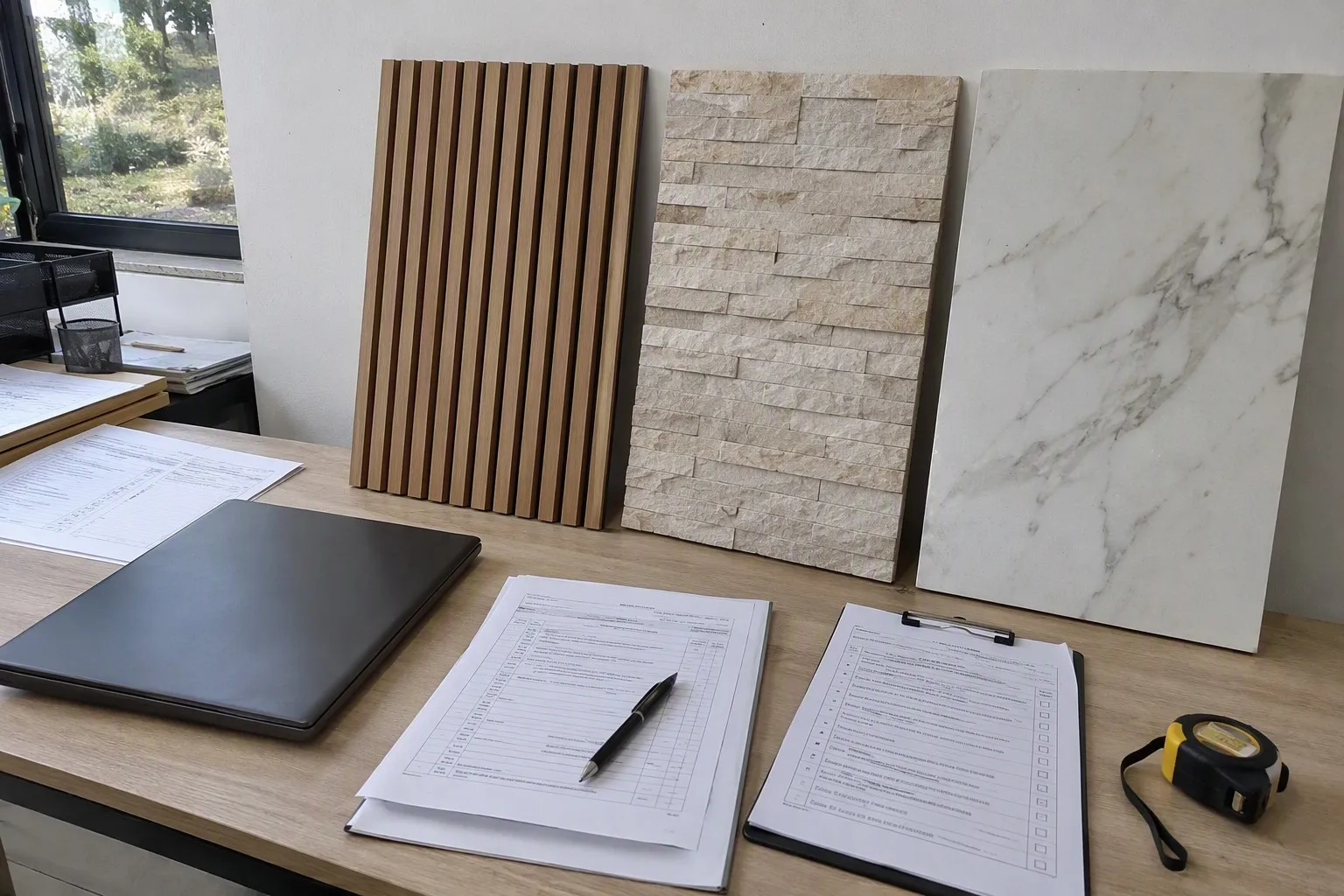
I have seen that most procurement problems do not begin with one dramatic mistake. They often begin with small assumptions: a vague quotation, an unapproved color tolerance, or a test report that does not match the purchased product. The following 10-point checklist helps buyers turn supplier selection into a more controlled process.
1. Is the Wall Panel Supplier in China a Verifiable Legal Entity?
A supplier may present a polished website, factory photos, and a fast quotation, yet buyers still need to know who is legally responsible for the order. If the contracting party, bank beneficiary, and export documents do not align, resolving a future dispute can become much harder.
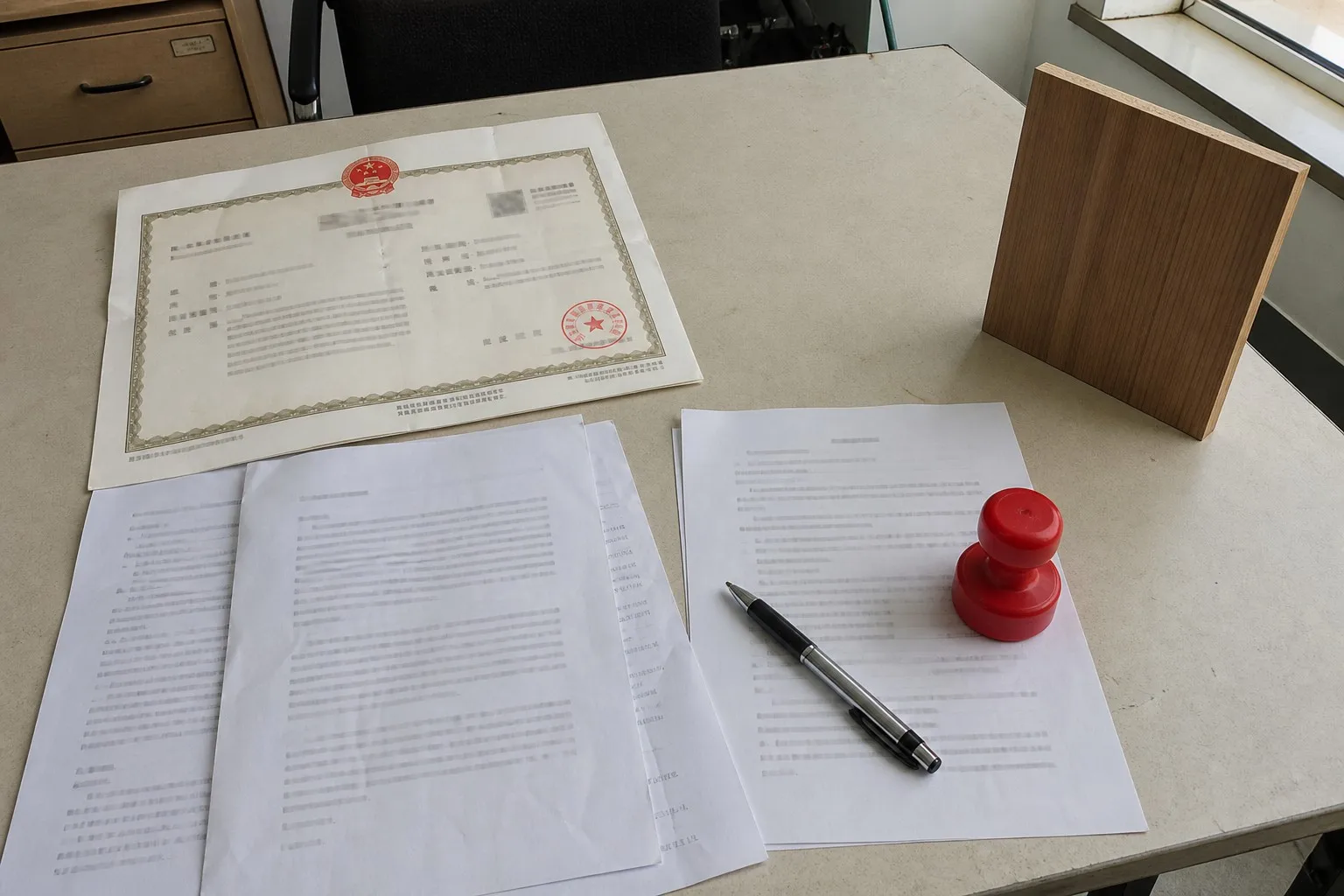
Buyers should verify the legal identity of a wall panel supplier in China before placing an order. I recommend checking the company registration name, business scope, registered address, invoice details, bank account beneficiary, and contractual party. These details should remain consistent across the quotation, proforma invoice, contract, and shipping documents.
What to request before paying a deposit
I recommend that buyers request documents early, before production begins. This does not mean that every supplier must disclose confidential information. It means that the basic commercial identity should be clear enough for reasonable due diligence.
Ask for:
- The full legal company name in English and Chinese
- A copy of the business license or company registration extract
- The registered address and operating address
- The name of the entity receiving payment
- A formal quotation and proforma invoice
- Export registration details where relevant
- The name and contact information of the responsible sales or project manager
A manufacturer, trading company, or sourcing company can each be a workable partner. I do not believe that one business model is automatically more reliable than another. The important question is whether the company is transparent about its role, supply-chain control, and responsibility for quality, delivery, and claims.
Confirm the quotation scope
A quotation should state more than a unit price. In my experience, unclear quotation scope creates many avoidable misunderstandings. For example, a buyer may assume that corner trims, protective film, pallets, or export cartons are included. The supplier may price only the panel itself.
| Item to Confirm | Why It Matters |
|---|---|
| Product name and model | Prevents substitution with a similar-looking panel |
| Material composition | Helps compare substrate, surface layer, and core material |
| Dimensions and thickness | Affects coverage, installation, freight, and fit |
| Quantity and unit | Avoids confusion between pieces, square meters, and cartons |
| Packaging method | Affects breakage and container loading |
| Incoterm | Defines freight and risk allocation |
| Payment terms | Clarifies deposit and balance timing |
| Claim procedure | Sets expectations if goods differ from specifications |
A reliable supplier should be willing to make the commercial scope understandable. I always suggest that buyers save the final signed quotation and contract version in a shared order file.
2. Does the Wall Panel Supplier in China Provide Product-Specific Evidence?
Certificates and test reports can look reassuring, but documents only have value when they clearly relate to the actual product being purchased. A generic certificate, an expired report, or a report for another panel construction may not support the buyer’s intended market or application.
A reliable wall panel supplier in China should provide documents that match the supplier, product model, material construction, testing standard, date, and intended use. Buyers should treat ISO certificates, laboratory reports, declarations, and compliance statements as evidence to review—not as automatic proof that every shipment meets every market requirement.
Review documents line by line
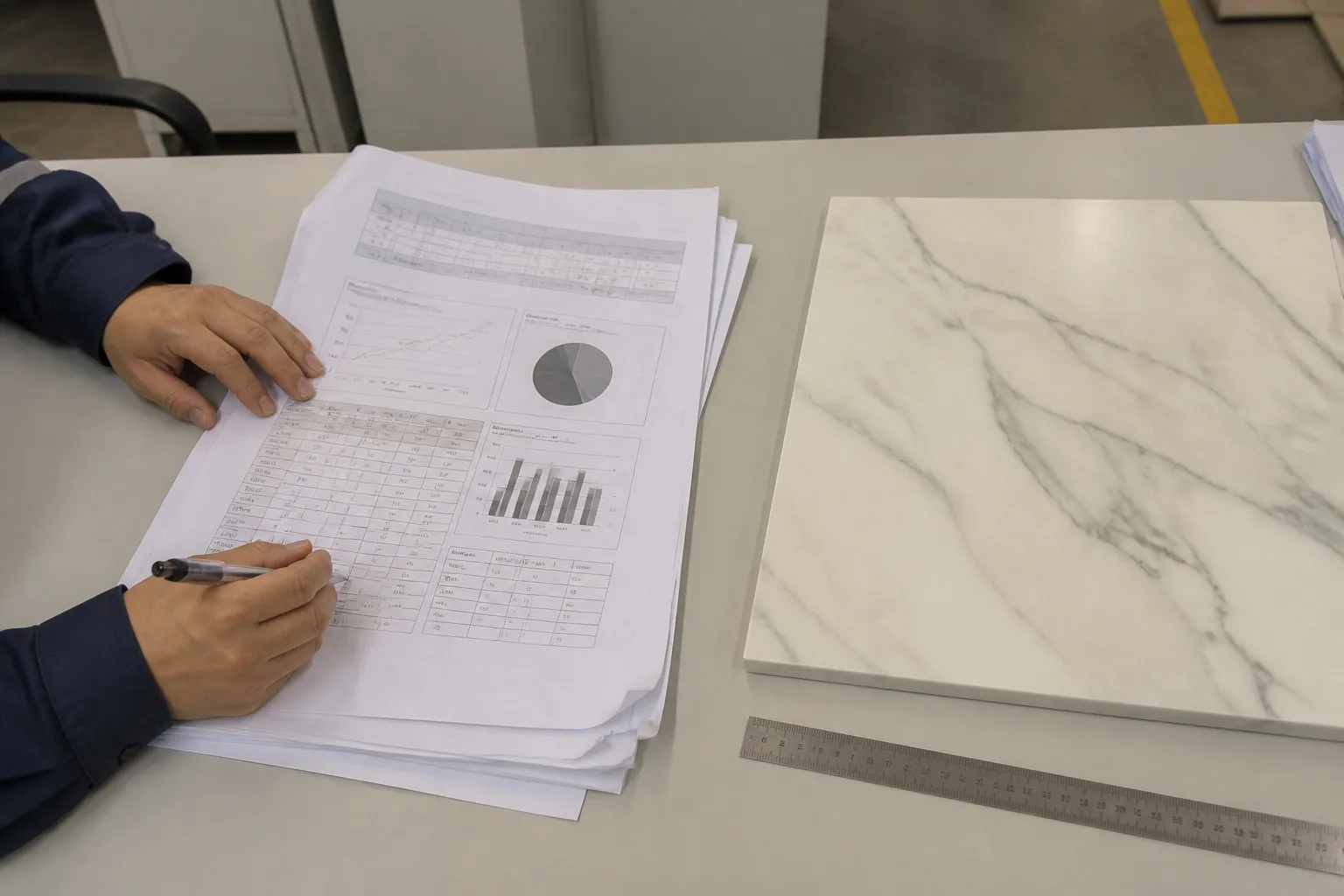
I have reviewed many documents with buyers during sample confirmation and order preparation. The most useful approach is simple: compare each report against the purchase specification rather than only checking whether a logo appears on the first page.
Buyers should examine:
- Applicant or manufacturer name: Does it match the contracting supplier or disclosed production facility?
- Product description: Does it identify the same wall panel type, composition, and model?
- Test method or standard: Is the test method relevant to the destination market and planned application?
- Report date: Is the document current enough for the buyer’s policy or project requirement?
- Testing laboratory: Is the laboratory identifiable, and can its status be independently checked if needed?
- Results and limitations: Does the report cover the exact performance characteristic being requested?
- Sample identification: Does the tested sample resemble the approved material and finish?
Keep compliance decisions application-specific
Wall panels may be used in homes, hotels, retail spaces, corridors, wet areas, exterior façades, or other settings. These applications can have different performance and regulatory expectations. I recommend that buyers consult a qualified local professional, testing body, architect, or compliance advisor when project-specific regulations apply.
A test report can support procurement due diligence, but it does not replace a buyer’s responsibility to confirm local code, fire, emissions, installation, or safety requirements.
For decorative products such as soft stone veneer, UV marble boards, SPC wall panels, and outdoor cladding, buyers should also verify whether the report applies to the exact substrate, thickness, coating, backing, and installation method. A product can look the same while having a different internal construction.
3. Can You Compare Wall Panel Supplier in China Quotations on the Same Basis?
A low quotation can seem attractive until the buyer discovers that the panel thickness, raw material grade, packaging, freight scope, or inspection terms are different. Without a common comparison sheet, buyers may compare numbers that do not represent the same commercial offer.
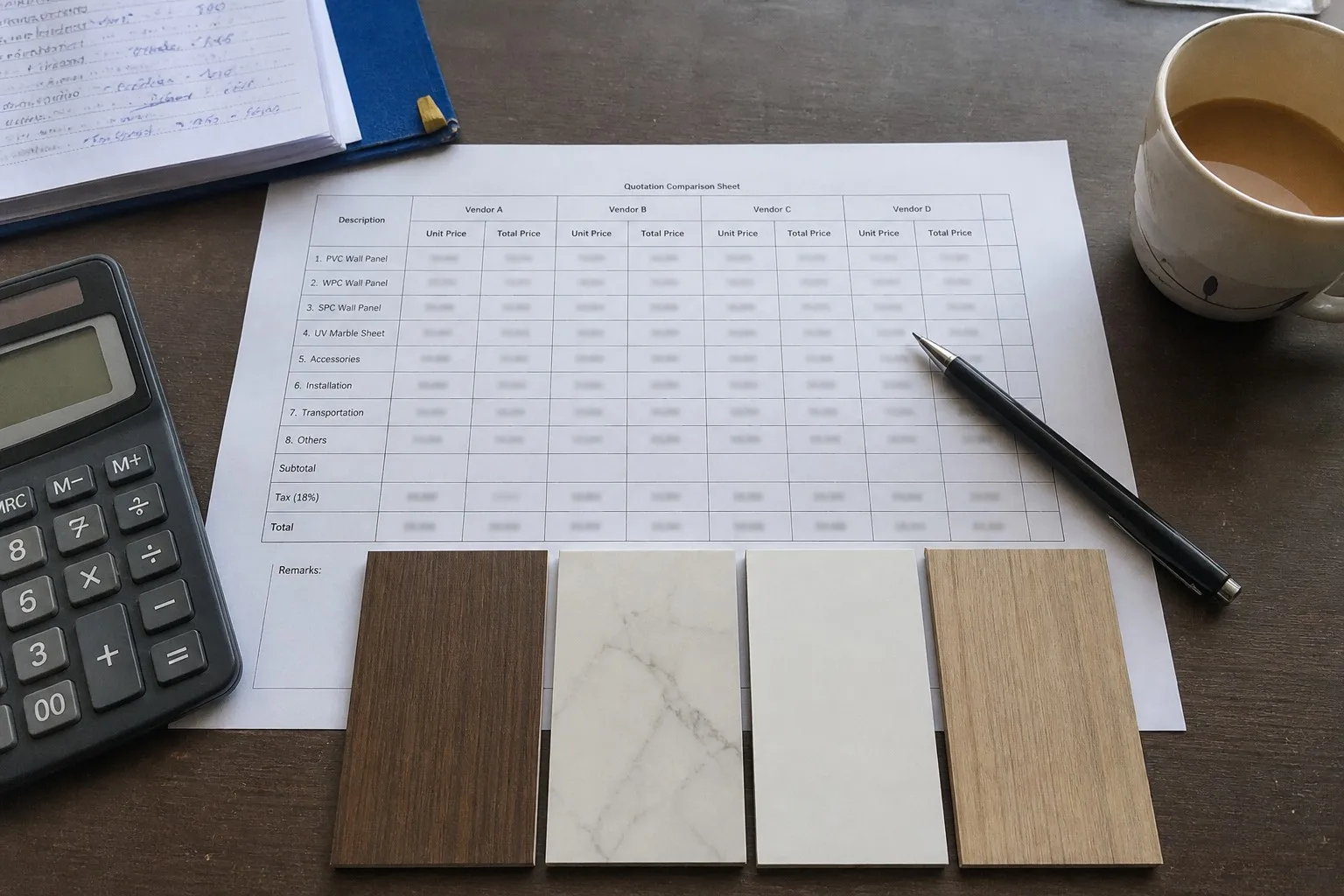
To compare a wall panel supplier in China fairly, buyers should normalize every quotation against one written specification. I recommend comparing material grade, dimensions, tolerances, surface finish, accessories, packaging, Incoterms, payment terms, inspection rights, lead time, and after-sales responsibility before selecting a supplier.
Build a quotation comparison matrix
I often recommend that purchasing teams create a simple spreadsheet before negotiating price. This method helps expose omissions that a unit-price comparison cannot reveal.
| Comparison Point | Supplier A | Supplier B | Supplier C |
|---|---|---|---|
| Panel size and thickness | Confirm | Confirm | Confirm |
| Surface finish / texture | Confirm | Confirm | Confirm |
| Substrate or core material | Confirm | Confirm | Confirm |
| Color reference | Confirm | Confirm | Confirm |
| Quantity and overage | Confirm | Confirm | Confirm |
| Carton and pallet packaging | Confirm | Confirm | Confirm |
| FOB / CIF / DDP scope | Confirm | Confirm | Confirm |
| Production lead time | Confirm | Confirm | Confirm |
| Third-party inspection allowed | Confirm | Confirm | Confirm |
| Claim and replacement process | Confirm | Confirm | Confirm |
Look beyond the panel price
The lowest price may reflect a different production assumption. For example, a quote may exclude edge protection, use thinner protective film, allow wider dimensional tolerance, or use a different grade of decorative layer. None of these choices is automatically wrong, but they need to be visible.
I suggest asking each supplier to state exclusions in writing. Buyers should also clarify:
- Whether the price includes trims, adhesives, clips, or installation accessories
- Whether color matching is based on a physical sample, color code, or digital image
- Whether production is made to order or supplied from stock
- Whether the quoted lead time begins after deposit, sample approval, or artwork approval
- Who pays for inspection, rework, replacement, or additional freight if specifications are not met
A commercially useful quotation is not necessarily the cheapest quotation. It is the one that allows the buyer to estimate the total landed and operational cost with fewer assumptions.
4. Is the Sample Supported by Written Specifications and Batch Controls?
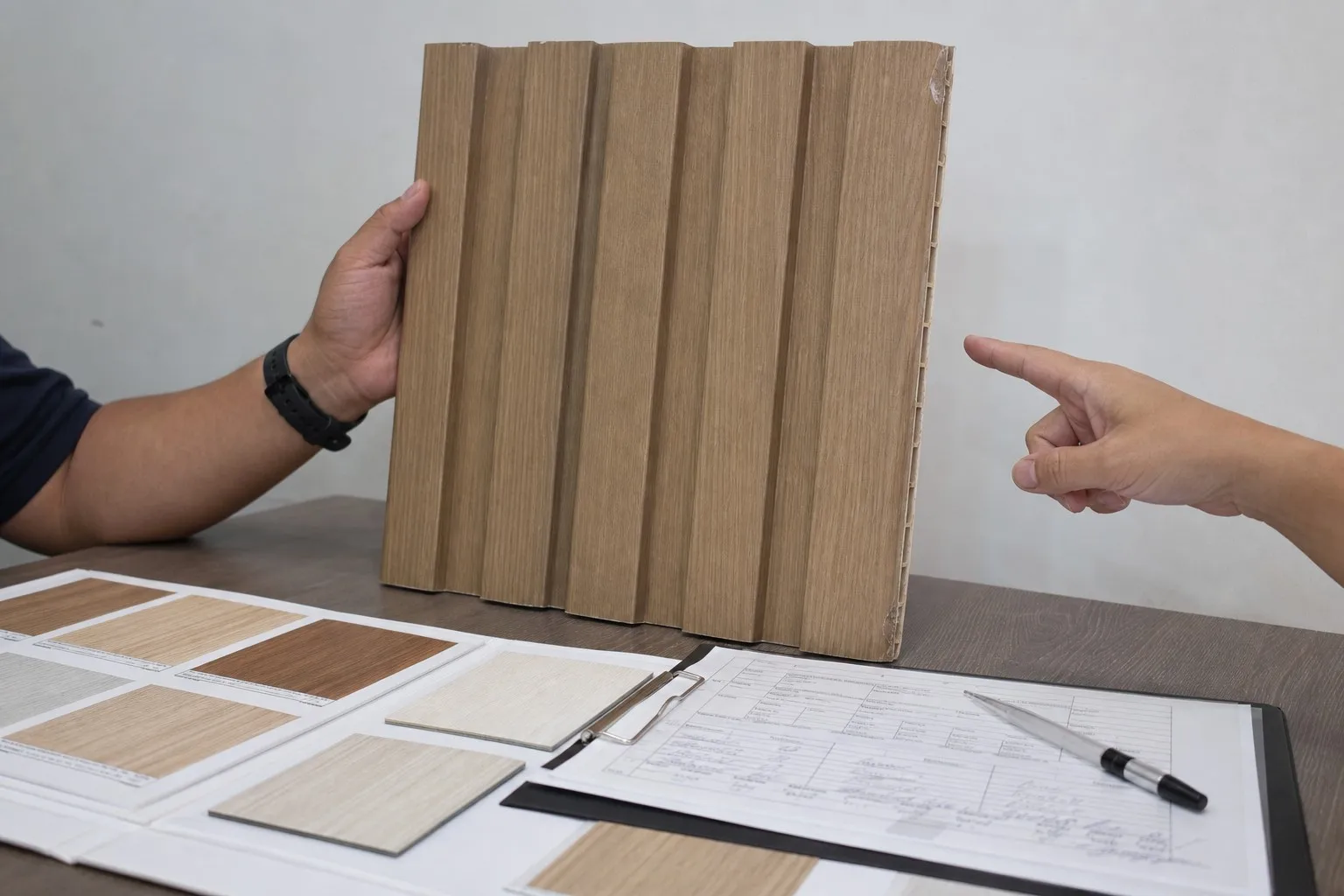
Samples are essential, but a sample alone does not prove that future production will match it. Decorative wall products can vary in color, gloss, texture, substrate appearance, edge condition, and dimensions. Buyers need a reference system that connects the sample to mass production.
An approved sample should serve as a reference point, not as the only quality agreement. I recommend that buyers retain signed samples, issue written product specifications, define acceptable tolerances, and agree on batch controls and inspection procedures before a wall panel supplier in China starts mass production.
Turn a sample into a production standard
I have found that the best sample process is practical and documented. The buyer and supplier should each retain an identified reference sample whenever possible. The order file should state what the sample represents and which visual differences are acceptable.
A clear specification sheet may include:
- Product model and internal SKU
- Panel length, width, and nominal thickness
- Measurement method and agreed tolerances
- Surface pattern, gloss level, texture, and color reference
- Substrate, backing, core, or reinforcement details
- Edge profile and cutting requirements
- Protective film requirements
- Packaging configuration and carton marking
- Defect definitions and inspection sampling approach
- Required product documents and labeling
Define visual variation carefully
Natural-stone-look, wood-look, marble-look, and textured decorative panels may have intended pattern variation. Buyers should distinguish intentional design variation from unacceptable inconsistency.
For example, a specification may define whether the following are acceptable:
- Shade variation between panels
- Repetition of printed patterns
- Surface scratches under normal viewing conditions
- Uneven gloss or coating marks
- Corner damage
- Edge chipping
- Bowing, warping, or dimensional deviation
- Delamination or surface bubbles
I recommend that buyers avoid approving samples based only on mobile-phone photographs. Lighting, camera settings, and screen calibration can change how finishes appear. A physical sample, signed specification, and pre-production confirmation provide a stronger basis for purchasing decisions.
5. Does the Wall Panel Supplier in China Have Realistic Capacity and Lead-Time Planning?
A supplier may promise a short lead time to win an order, but delivery reliability depends on material availability, production scheduling, finishing capacity, packaging capacity, and quality-release procedures.[^1] Buyers should ask how a promised date will actually be achieved.
A reliable wall panel supplier in China should explain how its lead time is calculated and what happens if production conditions change. Buyers should validate capacity claims through production planning, order sequencing, raw-material availability, inspection timing, and documented exception-handling procedures.

Ask for a production timeline
I recommend requesting a milestone schedule for important orders. The schedule does not need to reveal every internal factory detail. It should show enough information for the buyer to manage project deadlines and freight booking.
A useful timeline may include:
- Deposit or purchase order confirmation
- Artwork, color, and sample approval
- Raw-material preparation
- Production start
- Surface finishing or lamination
- Internal quality control
- Third-party inspection, if requested
- Packing completion
- Container loading or cargo handover
- Shipping document release
Test the promise, not only the stated lead time
At our business, we typically communicate a 7–14 day lead time for many standard products, subject to order details and production scheduling. I would not advise buyers to treat any supplier’s stated lead time as a guarantee without confirming the specific order conditions.
Capacity depends on several factors:
| Capacity Question | What Buyers Should Clarify |
|---|---|
| Available production lines | Are they suitable for the ordered product type? |
| Current schedule | Is the supplier already committed to other orders? |
| Raw materials | Are key materials available or made to order? |
| Custom finishes | Do custom colors or textures require extra approval time? |
| Packaging resources | Can cartons, pallets, and labels be completed on time? |
| Quality release | Is inspection included before shipment booking? |
| Contingency process | Who informs the buyer if a delay occurs? |
I have seen that early communication matters most when exceptions occur. A dependable supplier should explain the issue, provide revised options, and document the agreed action instead of simply remaining silent until the shipping date passes.
6. Are Quality Control and Pre-Shipment Inspection Clearly Defined?
Quality control becomes difficult when the buyer and supplier use different definitions of an acceptable product. A supplier may focus on internal checks, while the buyer expects independent inspection or a specific defect threshold. These expectations should be agreed before production.
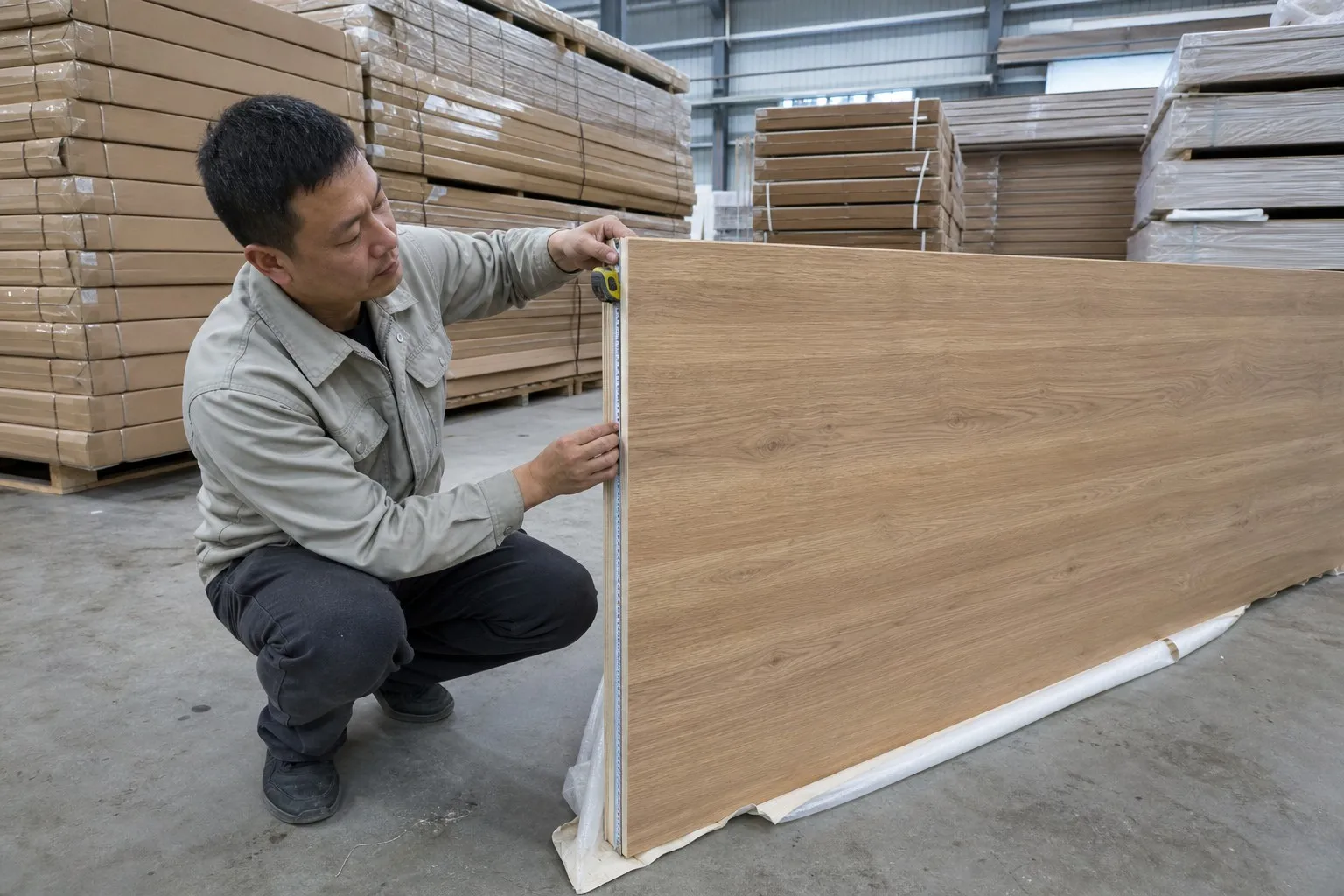
Buyers should define how a wall panel supplier in China will control quality before shipment. I recommend agreeing on specifications, inspection timing, sampling method, visual standards, packaging checks, and the process for handling nonconforming goods. Independent pre-shipment inspection can add another verification layer for larger or higher-risk orders.[^2]
Build inspection into the purchase order
Quality checks should not be limited to a final conversation before loading. Buyers can request checkpoints at different stages, especially for customized products or first orders.
Common checkpoints include:
- Pre-production review: Confirms approved materials, color references, and packaging requirements.
- During-production review: Checks dimensions, finish consistency, and manufacturing progress.
- Pre-shipment inspection: Reviews finished goods, quantity, packaging, marking, and visible defects before release.
- Loading supervision: May be useful when container condition, loading pattern, or carton handling is critical.
A third-party inspection company may provide additional independence, but buyers should still define the inspection criteria. An inspector can only assess against agreed requirements.[^3]
Preserve evidence for claims
I recommend preserving:
- Signed specifications
- Approved sample records
- Production photos and batch information, where available
- Inspection reports
- Packing lists
- Bill of lading or cargo handover records
- Container loading photos, when relevant
- Written communication about accepted deviations
These records do not eliminate procurement risk. However, they provide a clearer basis for discussing responsibility if problems appear after delivery. Buyers should also state the claim notification period, required evidence, and proposed remedy process in the purchase agreement.
7. Does the Supplier Communicate Clearly About Export, Packaging, and After-Sales Responsibility?
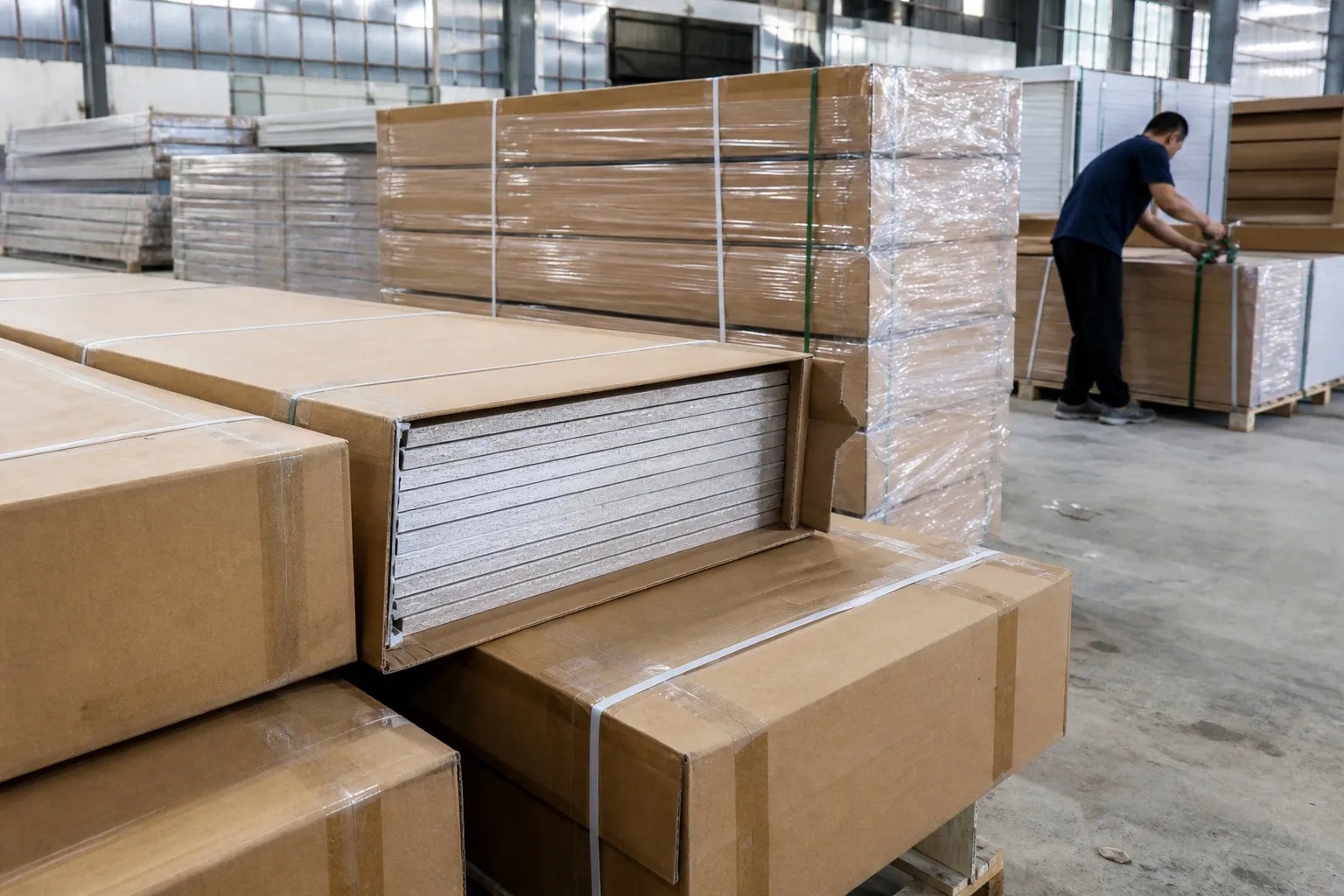
A panel can meet the agreed specification but still arrive with damage, missing accessories, incorrect labels, or delayed documents. Export execution is part of supplier reliability, particularly for importers managing container schedules, customs requirements, and project timelines.
A reliable wall panel supplier in China should clarify packaging, shipping terms, export documents, and claim responsibilities in writing. Buyers should confirm Incoterms, cargo handover points, carton markings, document timing, and the process for reporting transit damage or product discrepancies.
Confirm logistics responsibilities
Incoterms define important responsibilities[^4], but buyers should still ask practical questions. FOB, CIF, and DDP arrangements can involve different levels of supplier coordination, freight control, customs responsibility, and risk transfer.
Before shipment, confirm:
- Port of loading or destination
- Incoterm version and named location
- Carton dimensions and gross weight
- Pallet requirements and fumigation requirements, if applicable
- Container loading quantity
- Product labels, barcodes, and country-of-origin marking
- Required shipping documents
- Expected document release date
- Cargo insurance responsibility
- Contact person for freight and document questions
At our company, we support FOB, CIF, and DDP arrangements depending on the order and destination. I still encourage every buyer to confirm the scope in writing because service availability and import obligations vary by destination.
Evaluate after-sales accountability
After-sales responsibility should be specific. A statement such as “we guarantee quality” is less useful than a documented claim process.
Ask the supplier:
- What evidence is needed to open a claim?
- How quickly should buyers report visible damage or defects?
- Will the supplier review photos, videos, inspection reports, or retained samples?
- What remedies may be available: replacement, credit, rework support, or another agreed solution?
- Who covers additional freight if the supplier accepts responsibility?
A reliable partner does not need to promise that no issue will ever occur. I consider it more meaningful when the supplier explains how it will investigate and manage an issue if one does occur.
Frequently Asked Questions
Should I only work with a factory instead of a trading company?
I do not recommend using business type as the only selection rule. A factory may offer direct production control, while a trading company may provide useful sourcing or export coordination.[^5] Buyers should evaluate transparency, product knowledge, documentation, quality control, and contractual accountability.
How can I verify a wall panel supplier in China before placing an order?
I recommend verifying the legal entity, bank beneficiary, quotation scope, product documents, sample process, production plan, and export capability. Buyers can also arrange a third-party audit or inspection where appropriate. Every verification method has limits, so records should be retained.
Are ISO certificates enough to prove supplier quality?
No. An ISO certificate may provide useful information about a documented management system, but buyers should verify its issuer, validity, scope, and connection to the supplier.[^6] It does not by itself confirm that a specific wall panel batch meets your agreed specification.
How many samples should I approve before a bulk wall panel order?
The right number depends on the product, finish, project sensitivity, and order value. I recommend retaining at least one clearly identified reference sample and approving a written specification. Buyers may also request a pre-production sample for custom colors, textures, or packaging.
Should I use a pre-shipment inspection for wall panels?
A pre-shipment inspection can be valuable for first orders, large orders, custom products, or project-critical deliveries. It works best when the purchase order defines measurable requirements, defect criteria, packaging standards, and inspection timing. It is an additional control, not a complete guarantee.
Conclusion
Choosing a reliable wall panel supplier in China requires more than comparing unit prices or reviewing attractive brochures. I recommend a structured process: verify the legal entity, normalize quotations, review product-specific documents, approve written specifications, confirm capacity, define inspections, and document logistics and claims procedures. This 10-point checklist cannot remove every procurement risk, but it can help buyers make more evidence-based supplier decisions. If you are sourcing decorative wall materials, I invite you to share your required specifications so we can discuss samples, documentation, production scope, and export options clearly.
[^1]: "Integrated optimisation for production capacity, raw material ordering and ...", https://pmc.ncbi.nlm.nih.gov/articles/PMC7532740/. Operations-management research identifies material availability, capacity planning, production scheduling, and quality-release activities as interdependent determinants of manufacturing lead time and delivery performance. Evidence role: mechanism; source type: paper. Supports: Operations-management research linking material availability, capacity constraints, scheduling, and quality processes to manufacturing lead times and delivery performance.. Scope note: The relative importance of these factors varies by product design, supplier network, order size, and operating conditions. [^2]: "Trade Guide: WTO PSI", https://www.trade.gov/trade-guide-wto-psi. Pre-shipment inspection systems are designed to provide an independent check of specified shipment characteristics, such as quantity, quality, price, or classification, before goods are exported. Evidence role: general_support; source type: institution. Supports: The role of pre-shipment inspection in independently verifying specified shipment characteristics before export.. Scope note: Inspection findings depend on the agreed scope, sampling method, timing, and accessibility of the goods and cannot guarantee future performance or eliminate all defects. [^3]: "ISO 2859-1", https://chemistry.unt.edu/~tgolden/courses/iso2859-1.pdf. Inspection and sampling standards base conformity decisions on specified requirements, defined inspection procedures, and sampling plans; consequently, an inspection conclusion is limited to the characteristics and population covered by that agreed process. Evidence role: mechanism; source type: institution. Supports: Inspection principles establishing that inspection conclusions are based on defined requirements, scope, methods, and sampling procedures.. Scope note: A conforming inspection result does not prove that every unit is defect-free or that uninspected characteristics meet unstated requirements. [^4]: "Know Your Incoterms", https://www.trade.gov/know-your-incoterms. Incoterms rules provide standardized trade terms that allocate defined delivery obligations, costs, risk-transfer points, and certain customs responsibilities between seller and buyer in an international sales contract. Evidence role: definition; source type: institution. Supports: The function of Incoterms rules in defining delivery obligations, allocation of costs, and transfer of risk between sellers and buyers.. Scope note: Incoterms do not by themselves settle all contractual matters, including product quality, payment terms, title transfer, or remedies for breach. [^5]: "UN Trade and Development", https://en.wikipedia.org/wiki/UN_Trade_and_Development. International trade literature describes manufacturers as direct producers while trading intermediaries may coordinate sourcing, supplier relationships, documentation, logistics, and export transactions across supply chains. Evidence role: general_support; source type: institution. Supports: Neutral descriptions of the different functions manufacturers and trading intermediaries may perform in international supply chains.. Scope note: Actual capabilities and accountability vary substantially by company; business type alone does not establish supplier reliability. [^6]: "ISO - Certification", https://www.iso.org/certification.html. Management-system certification indicates that an organization’s management system has been assessed against the relevant standard within a stated scope; certificate users should examine the certified entity, scope, issuing body, and current status. Evidence role: definition; source type: institution. Supports: The meaning of accredited management-system certification and the importance of checking certificate scope, certification body, and status.. Scope note: Management-system certification does not constitute product certification and does not, by itself, demonstrate that a particular production batch meets a buyer's specification.